
Blog
On June 12, 2026, CBP released an extremely helpful guide for importers responding to a CBP detention or investigation involving forced labor. This guide, called the CBP Forced Labor Enforcement Operational Guidance for Importers, is especially helpful for determining the CBP review process and the evidentiary package necessary to respond to these investigations.
Forced labor investigations can take place under one of three authorities: The Uyghur Forced Labor Prevention Act (“UFLPA”) (regarding goods made in whole or in part in the Xinjiang Uyghur Autonomous Region of China), the Countering America’s Adversaries through Sanctions Act (“CAATSA”) (regarding goods made in North Korea), or a withhold release order (“WRO”) (regarding goods made by parties named in each order). This guidance document addresses the evidentiary requirements and process flow for each kind of investigation.
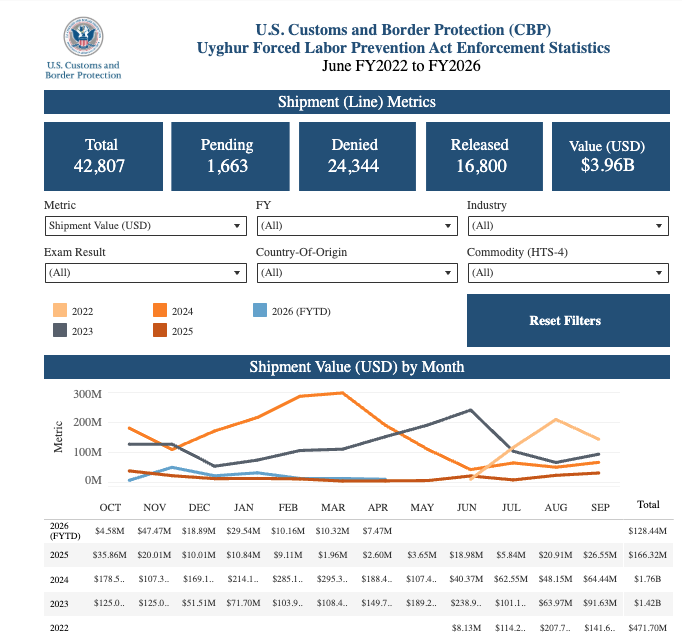
Interestingly, this document is being released almost four years after CBP first released its Strategy to Prevent the Importation of Goods Mined, Produced, or Manufactured with Forced Labor in the People’s Republic of China and its UFLPA Operational Guidance for Importers. It also comes in the context of historically low UFLPA enforcement by value compared to the final two years of the Biden administration (as shown in the screenshot of the CBP UFLPA dashboard below, taken on June 15, 2026), but with the second Trump administration renewing its focus on forced labor in the context of Section 301 duties.
So, does this publication signal increased forced labor enforcement on the horizon? We will have to see.
Disclaimer: Our practice focuses on U.S. trade regulations (and related federal regulations, like ICTS, as they emerge). We do not advise on state laws or on the laws of any other country.